
Why Marriage Doesn't Replace Self-Control
A rabbit hole through 1 Corinthians 7, Galatians 5, Titus 2, and 2 Peter that completely changed how I understand self-control.
Scriptures we studied: Galatians 5:19–23, 1 Corinthians 6:12, 1 Corinthians 7:1, 5, 7, 9, Hebrews 4:15, Titus 2:11–12, Romans 12:2, Psalm 119:11, John 14:26, Matthew 4, Ephesians 6, 2 Peter 1:3, 5–8
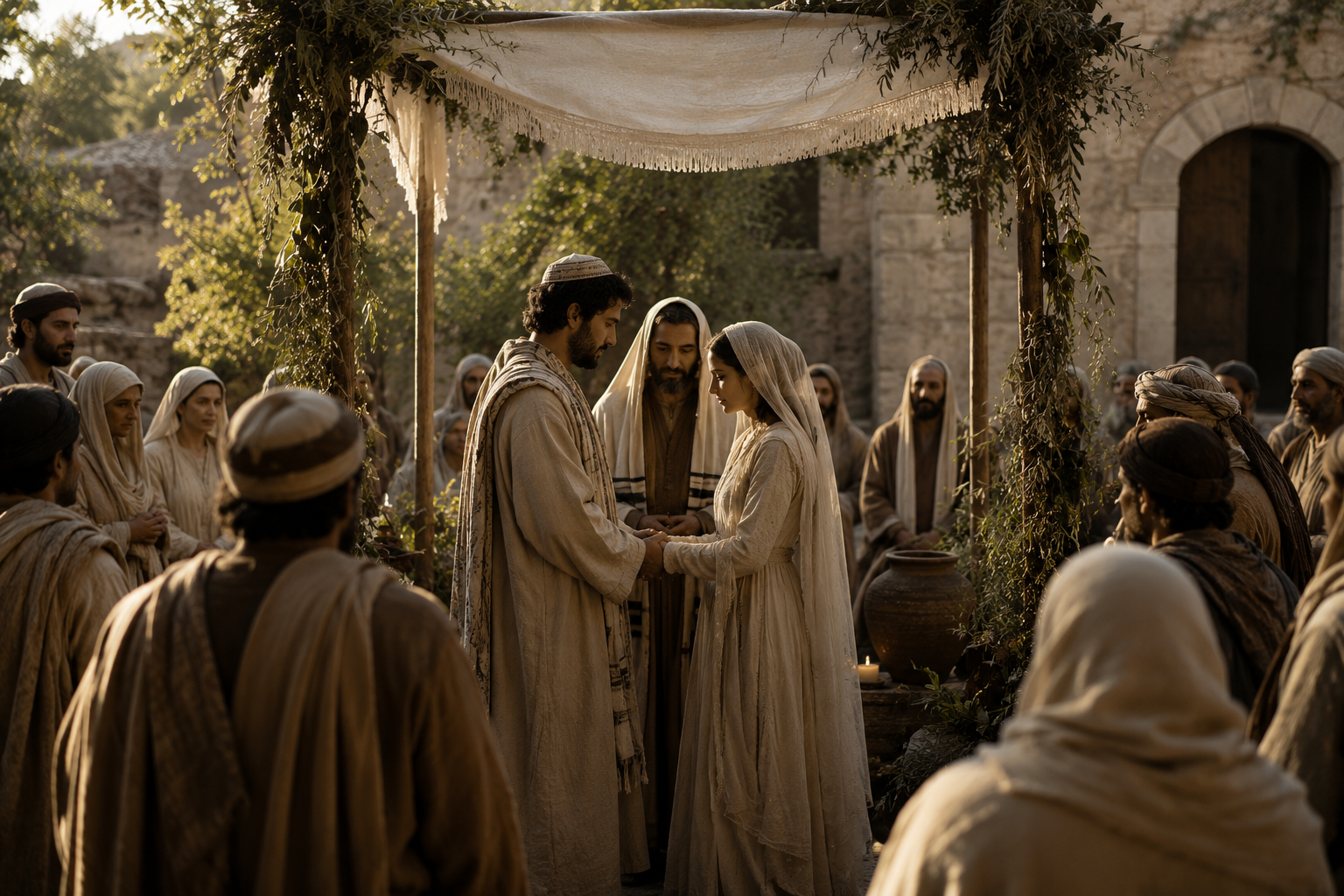
A young lady asked a question about marriage at a young age.
Her question was simple. She'd been thinking about marriage. Specifically, 1 Corinthians 7, where Paul says,
"If they cannot exercise self-control, they should marry. For it is better to marry than to burn with passion."
She asked,
"Do you think some people get married too young simply because they don't have self-control?"
The moment she asked that question, I immediately thought about a Bible study I did with my oldest daughter about ten years ago called The Sacred Search by Gary Thomas. To this day, it's still one of my favorite Bible studies on relationships, and I highly recommend it to anyone who is single or dating.
One of the biggest takeaways I remember wasn't, "Who should I marry?" It was a much deeper question:
"Why do I want to get married?"
Now before anyone gets offended, I know Paul absolutely says there are situations where marriage is the better option than continually giving in to sexual temptation. So yes, there is Scripture that supports that.
But the more we texted, the less I felt like the real question was about marriage.
The real question became:
What exactly is biblical self-control?
Because if self-control is one of the fruit of the Spirit, if elders are required to have it, if Peter says it's a necessary part of spiritual maturity, if Titus says grace teaches it... then surely God isn't talking about something as small as simply "trying harder."
So we started pulling on the thread.
Whenever I study, I almost never stop at one verse. I follow the cross references, read the commentary, look up the original language, and keep asking questions until Scripture starts interpreting Scripture.
And somewhere along the way, I realized I may have misunderstood self-control for most of my Christian life.
I always thought self-control meant having enough willpower to tell yourself "no." But the deeper I dug into Scripture, the more I realized the Bible paints a much bigger picture.
And honestly? It all started with one little word.
Fruit.
Rabbit Hole #1: It All Started with One Little Word
As I started studying self-control, I naturally found myself in Galatians 5. It's probably the passage most of us think of when we hear the words self-control.
"But the fruit of the Spirit is love, joy, peace, patience, kindness, goodness, faithfulness, gentleness, self-control; against such things there is no law."
Galatians 5:22-23
I've read this passage dozens of times. I've taught this passage. I've even challenged myself to personalize it.
Melissa's love... Melissa's joy... Melissa's peace... Melissa's patience...
Then I'd get to Melissa's self-control, and that's usually where I'd stop. Because if I'm being honest, I tend to think about all the places I still struggle instead of all the places God has already grown me.
But this time, one little word caught my attention.
Fruit. Not fruits.
That may not seem like a big deal, but I don't think Paul wasted words. That may sound like grammar, but sometimes theology hides inside grammar.
In Greek, the word is καρπός (karpos). It simply means fruit, produce, or harvest. And it's singular.
Now compare that to what Paul says just a few verses earlier:
"Now the works of the flesh are evident..." Galatians 5:19
The word works is the Greek word ἔργα (erga). It's plural.
The flesh produces many different works: sexual immorality, impurity, jealousy, fits of anger, selfish ambition, envy, drunkenness. The list goes on. It's almost chaotic. Every person seems to struggle with a different combination.
But then Paul changes his language. He doesn't say the fruits of the Spirit. He says the fruit of the Spirit.
I don't think that's an accident.
The Holy Spirit isn't trying to produce nine disconnected qualities in our lives. He's producing one transformed life. A life that becomes recognizable because it increasingly looks like love, joy, peace, patience, kindness, goodness, faithfulness, gentleness, and self-control.
That completely changed the way I read this passage. Instead of treating these like nine separate boxes to check, I started wondering if they're actually nine characteristics of one healthy tree.
Think about an apple. It has sweetness, juice, seeds, color, texture, aroma. Those aren't six different apples. They're different characteristics of the same fruit.
Could Paul be painting the same picture?
Then another thought hit me. Throughout Scripture, God constantly uses trees and fruit to describe spiritual life.
In Genesis, humanity is told to be fruitful. Psalm 1 describes the righteous person as a tree planted by streams of water that yields its fruit in season. Jeremiah 17 paints the same picture. Jesus says that every healthy tree bears good fruit. In John 15, He tells His disciples to abide in Him because branches cannot bear fruit by themselves. Paul talks about the fruit of the Spirit. And Revelation ends with the Tree of Life bearing fruit every month for the healing of the nations.
That's not a coincidence. God seems to love teaching through trees.
And maybe that's because trees teach us something we constantly forget: healthy trees don't chase fruit. They grow roots. The fruit simply tells you what's happening beneath the surface.
That made me stop and ask myself a different question. Instead of asking, "Why don't I have more self-control?" maybe I should be asking, "How healthy are my roots?"
Because if Paul is right and Jesus is right, then fruit isn't something I manufacture. It's something that grows when I'm deeply connected to the source of life.
That realization completely changed the direction of this rabbit hole. Because now the question wasn't "How do I get more self-control?" The question became, "How does God grow it?"
And that's where the study got really interesting.
Rabbit Hole #2: Self-Control Isn't What I Thought It Was
Once I realized the fruit of the Spirit wasn't a list of spiritual accomplishments, I started asking a different question. What exactly is self-control? Not my definition. Not Webster's definition. What did Paul mean when he wrote it?
The Greek word translated self-control is ἐγκράτεια (enkrateia).
Like many Greek words, it's made up of smaller words. ἐν (en) means within or inside. κράτος (kratos) means strength, power, dominion, or mighty force. If you've ever heard the word democracy, the ending -cracy comes from the same root. It has to do with who holds the power or authority.
So enkrateia paints a picture of someone who possesses strength within. It's the ability to govern yourself instead of being governed by your impulses.
That immediately challenged the picture I had in my mind. I had always imagined self-control as someone white-knuckling temptation. Gritting their teeth. Trying really hard not to mess up. But the word itself points to something much deeper. It isn't simply resisting. It's ruling.
Or maybe a better way to say it is: Who is sitting on the throne of your life?
Because the opposite of self-control isn't simply temptation. It's being mastered.
That sent me to another verse I'd never connected to this study before. Paul writes in 1 Corinthians 6:12:
"All things are lawful for me," but not all things are helpful. "All things are lawful for me," but I will not be mastered by anything.
That phrase, "I will not be mastered," uses a completely different Greek word: ἐξουσιάζω (exousiazō). It means to be ruled by, to be dominated by, to be brought under the authority of something else.
Did you catch the contrast?
Enkrateia is Spirit-enabled mastery over yourself. Exousiazō is allowing something else to master you.
Suddenly this wasn't just about self-control anymore. It was about lordship. Who is ruling me? Is it my anger? My fear? My loneliness? My need for approval? My appetite? My sexual desires? My phone? My schedule? My comfort?
Because here's what I've realized: anything can become a master.
Sometimes we reduce self-control to one issue. Usually sex. But Scripture paints a much bigger picture. A person can be sexually pure and still be mastered by bitterness. Another person can control their spending but be ruled by pride. Someone else may never touch alcohol but be completely controlled by the opinions of other people.
The issue isn't what is mastering us. The issue is that something other than Christ is.
And then something else occurred to me. Jesus was tempted. Repeatedly. Yet Hebrews tells us He was without sin (Hebrews 4:15). That means temptation itself isn't evidence that you lack self-control. Let that sink in.
Sometimes I think we feel guilty simply because we're tempted. But Jesus proves that's not true. The temptation wasn't the sin. The question was always: Who would He obey?
That's a question every one of us faces every day. Not just in dramatic moments. In ordinary ones. When someone cuts us off in traffic. When we're exhausted. When we want to gossip. When we're lonely. When we're scrolling our phones instead of praying. When we want immediate comfort instead of trusting God.
Every one of those moments asks the same question: Who is ruling me right now?
And maybe that's why self-control is the last characteristic listed in the fruit of the Spirit. Not because it's the least important, but because it protects every other fruit.
Without self-control, love becomes selfish. Joy becomes dependent on circumstances. Peace disappears the moment life gets difficult. Patience runs out. Gentleness turns harsh. Faithfulness becomes inconsistent.
Self-control is like the fence around a flourishing garden. Not because the fence creates the fruit. But because it protects what God is growing.
At this point in my study, I thought I was beginning to understand self-control. Then I opened Titus chapter 2. And Paul completely turned my understanding of grace upside down.
Rabbit Hole #3: Grace Doesn't Just Forgive. It Trains.
Let's read the whole passage first.
"For the grace of God has appeared that offers salvation to all people. It teaches us to say 'No' to ungodliness and worldly passions, and to live self-controlled, upright and godly lives in this present age."
Titus 2:11-12 (NIV)
I don't know about you, but for years I completely skimmed over one word in this passage.
Teaches.
Or depending on your translation: training.
I've always thought of grace as something that happens after I sin. I mess up. I confess. God forgives me. That's grace. And that's absolutely true. But that's not what Paul is emphasizing here. He's saying grace doesn't only forgive us. Grace teaches us.
That completely changed how I understood the Christian life. So naturally, I had to go look up the Greek.
The word translated "teaches" or "training" is παιδεύουσα (paideuousa), a form of the verb παιδεύω (paideuō). This wasn't a classroom word. It was a family word. It described the way a father raised his children. It meant to train, to discipline, to educate, to correct, to shape someone's character over time.
That surprised me. Because Paul could have chosen a word that simply meant "to instruct." He didn't. Instead, he chose a word that describes raising a child into maturity.
Think about that. Grace isn't simply God's forgiveness. Grace is God's training program. Almost like a loving Father saying, "Come walk with Me. I'm going to teach you how to live."
That changes everything. Because if grace is training, then growth should be expected. Training isn't instant. Training is repetitive. Training is sometimes difficult. Training requires practice. An athlete isn't trained in one afternoon. A child isn't raised in one conversation. And a disciple isn't transformed overnight.
Then another question hit me. How does grace actually teach us?
It's one thing to say grace trains us. It's another thing to understand what that looks like on a Tuesday afternoon when temptation shows up. Because grace isn't some invisible force floating around us. So how does God actually train His children?
That's when all the other verses we'd been studying suddenly started connecting.
Romans 12 says our minds are renewed. Psalm 119 says to hide God's Word in our hearts. Jesus says the Holy Spirit will remind us of everything He has taught us. In the wilderness, Jesus answers every temptation with, "It is written..."
Could it be that one of the primary ways grace trains us is through truth?
The more I thought about it, the more beautiful the picture became. Grace saves us. Then grace begins renewing our minds through God's Word. The Holy Spirit takes that truth and brings it to our remembrance at exactly the moment we need it. We're faced with a choice. Sometimes we obey. Sometimes we fail. When we fail, grace doesn't abandon us. It forgives us, picks us up, and continues the training.
That's what good fathers do. They don't throw away the child because the child stumbled while learning to walk. They help them up. Again. And again. And again. Until one day the child is walking without even thinking about it.
I wonder if that's why spiritual growth is described so often with trees. Trees don't wake up one morning and decide to produce fruit. They simply stay rooted, receive what they need, and over time the fruit becomes visible.
Maybe that's what grace is doing in us. Not simply covering yesterday's failures. But patiently growing tomorrow's obedience.
Rabbit Hole #4: So How Does Grace Actually Train Us?
At this point, I had another question. If grace trains us, how?
Because I don't know about you, but I've never woken up in the morning and thought, "Wow... I can feel grace teaching me today."
So what does it actually look like?
I think Scripture answers that question. But it doesn't answer it in one verse. It answers it across the entire Bible.
The first stop is Romans.
"Do not be conformed to this world, but be transformed by the renewing of your mind..."
Romans 12:2
That word transformed is fascinating. The Greek word is μεταμορφόω (metamorphoō). It's where we get our English word metamorphosis. Think about a caterpillar becoming a butterfly. The butterfly doesn't simply behave differently. It becomes something different.
That's the picture Paul is painting. Christianity isn't behavior modification. It's transformation. But notice where transformation begins. Not with your hands. Not with your habits. Not even with your actions. It begins with your mind.
That made me ask another question. How does God renew my mind?
Psalm 119 gives us a clue.
"I have hidden Your word in my heart that I might not sin against You."
Psalm 119:11
The Hebrew word translated hidden is צָפַן (tsaphan). It means to treasure, to store away, to keep something valuable, to carefully preserve. David isn't talking about memorizing verses so he can win Bible trivia. He's talking about storing God's truth somewhere it can be retrieved when he needs it most.
That reminded me of something Jesus said.
"But the Helper, the Holy Spirit... will teach you all things and bring to your remembrance all that I have said to you."
John 14:26
I stopped right there. Did you catch it? The Holy Spirit brings to our remembrance what Jesus has already taught. Generally speaking, you can't remember what you've never learned. You can't recall truth that was never stored.
So maybe this is why reading Scripture matters so much. Not because reading your Bible earns God's approval. Not because checking off a Bible reading plan makes Him happier with you. But because every time you read His Word, you're planting seeds. You're storing truth. You're renewing your mind. You're giving the Holy Spirit something to bring back to your remembrance when temptation comes.
Then suddenly another story made perfect sense.
Matthew chapter 4. Jesus has been fasting for forty days. He's hungry. He's physically weak. Satan comes to tempt Him. And every single time, Jesus responds the same way:
"It is written..."
Think about that. Jesus didn't pause and say, "Hold on... let Me go find a scroll." The Word was already in Him. It had already been hidden in His heart. So when the temptation came, truth came out.
And maybe that's exactly how grace trains us. Not by magically removing every temptation. But by renewing our minds with truth until, over time, truth becomes our first response instead of our feelings.
Maybe that's why Scripture is called the Sword of the Spirit in Ephesians 6. When Jesus fought temptation, He didn't swing a physical sword. He wielded the Word of God.
The more I connected these passages, the more I realized something. Grace doesn't train us apart from God's Word. It trains us through God's Word.
Grace saves us. Scripture renews us. The Holy Spirit reminds us. Then comes the moment of decision: Will I believe my feelings? Or will I believe what God has already said?
That's where self-control begins. Not with stronger willpower. With a renewed mind.
Rabbit Hole #5: Peter Gives Us a Blueprint for Spiritual Growth
By this point in the study, the pieces were finally starting to connect. Grace trains us. God's Word renews our minds. The Holy Spirit reminds us of truth.
But then another question popped into my head. If that's how God changes us, what should growth actually look like?
Peter answers that question. And honestly, I don't think I've ever appreciated this passage the way I do now.
Let's start before Peter gives us the list.
"His divine power has given us everything required for life and godliness through the knowledge of Him who called us by His own glory and goodness."
2 Peter 1:3
Stop there for a second. Peter doesn't say God will eventually give us what we need. He says He has already given us everything we need for life and godliness. That's grace again. Before Peter ever tells us to grow, he reminds us what we've already received.
I think that's important because we often reverse the order. We think, "If I grow enough, then God will bless me." Peter says the opposite. God has already blessed you. Now grow.
Then Peter says something that almost sounds strange.
"For this very reason, make every effort..."
2 Peter 1:5
Wait. Didn't we just spend an entire rabbit hole talking about grace? Now Peter says, make every effort?
At first that sounded like a contradiction. Then I realized it wasn't.
"Grace isn't opposed to effort. Grace is opposed to earning."
Dallas Willard
Think about that. No athlete earns the right to be on the team by practicing. They practice because they're already on the team. A child doesn't earn the right to belong to their family by learning to walk. They learn to walk because they already belong.
That's exactly what Peter is describing.
Then he gives us what many scholars call a ladder or staircase of spiritual maturity:
"...supplement your faith with goodness, goodness with knowledge, knowledge with self-control, self-control with perseverance, perseverance with godliness, godliness with brotherly affection, and brotherly affection with love."
2 Peter 1:5-7
I couldn't help but notice something. Self-control isn't first. It's actually right in the middle.
That surprised me. Because I think most of us try to start there. We say, "I'm just going to try harder. I'm going to have more discipline. I'm going to get my act together."
Peter doesn't begin there.
He starts with faith. Then goodness. Then knowledge. Only then, self-control.
Why does knowledge come before self-control? I think the answer is simple. You can't live according to truth that you don't know. Romans told us our minds have to be renewed. Psalm 119 told us to hide God's Word in our hearts. Jesus showed us truth overcoming temptation. Now Peter tells us knowledge comes before self-control. The Bible is telling one consistent story: truth comes first, then obedience.
The more I thought about it, the more I realized that's exactly how parents raise children. A loving father doesn't simply say, "Obey me." He teaches. He explains. He corrects. He models. Then he expects the child to begin living what they've learned.
That's exactly what grace is doing. It's raising us.
Then Peter says something beautiful. After self-control comes perseverance. The Greek word is ὑπομονή (hypomonē). It literally means to remain under. To endure. To stay faithful under pressure.
Maybe that's why Peter puts it after self-control. Because anyone can make one good decision. The Christian life isn't one decision. It's thousands of them. Day after day. Year after year.
Then comes godliness, brotherly affection, and finally... love.
Did you notice where Peter ends? Not self-control. Love.
That reminded me of something Jesus said. The greatest commandment isn't "Have self-control." It's: love the Lord your God, love your neighbor. Maybe self-control isn't the destination. Maybe it's one of the tools God uses to help us become people who truly love.
Peter finishes this section with words I think every believer needs to hear.
"If these qualities are yours and are increasing, they will keep you from being ineffective and unfruitful in the knowledge of our Lord Jesus Christ."
2 Peter 1:8
That word: increasing. Not perfect. Not finished. Increasing.
That encouraged me more than I can explain. Because sometimes I read the fruit of the Spirit and immediately think about all the places I still need to grow. Peter reminds me that God isn't asking, "Are you finished?" He's asking, "Are you growing?"
Trees don't become mature overnight. Children don't become adults in a week. Disciples don't become like Jesus after reading one Bible study. Growth takes seasons. And healthy things grow.
A thought I couldn't shake...
The more I read Peter's list, the more it looked less like a checklist and more like the growth rings inside a tree. Every season adds another layer. You can't see it happening day by day. But years later, you cut the tree open, and every season is there.
Maybe spiritual growth works the same way. Most days it feels invisible. Until one day you respond differently than you would have five years ago. You forgive faster. You trust deeper. You panic less. You love more.
And then you realize: the Holy Spirit has been growing fruit all along.
Rabbit Hole #6: Was Paul Really Talking About Marriage?
Remember how this whole rabbit hole started?
A young lady asked me if people sometimes get married too young because they don't have self-control. She was referring to one passage:
"But if they do not have self-control, they should marry, since it is better to marry than to burn with desire."
1 Corinthians 7:9
Before we go any further, I don't want to minimize what Paul is saying. Marriage really is one of God's good provisions for sexual desire. Paul isn't embarrassed by that. Neither should we be.
At first glance, it almost sounds like Paul is saying, "If you're struggling sexually, just get married." Honestly, that's how I've heard this passage taught most of my life.
But after studying everything else Scripture says about self-control, I'm not sure that's what Paul is saying...
Let's zoom out.
One of the biggest mistakes we make when reading the Bible is starting in the middle of a conversation. Paul wasn't writing random verses. He was answering questions the Corinthian church had written to him. Look at how chapter seven begins:
"Now concerning the matters about which you wrote..."
1 Corinthians 7:1
That changes everything. Paul is responding to real people with real struggles. Corinth wasn't exactly known for sexual purity. It was a city filled with pagan worship, prostitution, and sexual immorality. The believers there were trying to figure out how to follow Jesus in a culture where sexual temptation was everywhere.
So Paul addresses singleness, marriage, widows, married couples, even temporary abstinence within marriage. Then, in the middle of that conversation, he says, "If they do not have self-control, they should marry..."
Notice something. Paul doesn't command everyone to get married. In fact, just a few verses earlier he says something surprising:
"I wish that all people were as I am. But each has his own gift from God..."
1 Corinthians 7:7
Paul actually celebrates singleness. Not because marriage is bad. But because undivided devotion to Christ is good. That means Paul isn't elevating marriage over singleness, nor singleness over marriage. He's elevating faithfulness. That's a huge difference.
Then another verse jumped off the page. Speaking to married couples, Paul says:
"Do not deprive one another... so that Satan may not tempt you because of your lack of self-control."
1 Corinthians 7:5
Wait. Married people still need self-control?
That completely challenged my assumptions. Marriage doesn't replace self-control. Marriage doesn't eliminate temptation. Marriage doesn't magically remove lust. If anything, marriage reveals whether self-control was actually there in the first place.
Because marriage doesn't solve selfishness. It exposes it.
Marriage doesn't solve impatience. It exposes it.
Marriage doesn't solve pride. It exposes it.
Marriage doesn't solve anger. It exposes it.
And it certainly doesn't solve a heart that is mastered by its desires.
That realization reminded me of something Gary Thomas wrote in The Sacred Search. He encourages singles to ask a very uncomfortable question: "If this person never changed, would I still marry them?"
Not if they became more mature. Not if they became more responsible. Not if they became more spiritual. If they stayed exactly as they are today, would you still joyfully choose them?
That's a sobering question. Because marriage isn't marrying someone's potential. It's marrying a real person.
Then our conversation took an unexpected turn. I asked another question, one I've honestly never heard in a marriage class.
If an illness took sex off the table for the rest of your marriage, would you still want to marry this person?
Please don't misunderstand me. Sex is God's idea. It's beautiful. It's holy. It's part of His design for marriage. This question isn't minimizing sex. It's revealing the foundation.
If sex disappeared tomorrow, would friendship remain? Would respect remain? Would shared faith remain? Would the desire to serve Christ together remain? Because those are the things that sustain a marriage long after the honeymoon is over.
I don't think Paul and Gary Thomas are saying different things. I think they're answering two completely different questions.
Paul is answering: Where has God designed sexual intimacy to belong? The answer: within the covenant of marriage.
Gary Thomas is answering: How should you choose the person you enter that covenant with? The answer: not merely with chemistry, not merely with emotion, not merely because you're tired of waiting. Choose someone whose life is already moving toward Christ.
Then it hit me. Maybe the question isn't "Should I get married if I'm struggling with self-control?" Maybe the better question is: "Am I becoming the kind of person who can faithfully love another human being like Christ loves me?"
Because that's the real preparation for marriage. Not simply planning a wedding. But becoming a disciple.
And then one final thought wouldn't leave me...
The more I studied self-control, the less I thought about sex. The more I thought about Jesus.
Because every passage we studied kept pointing back to the same question: Who is on the throne? My desires? Or Christ?
And maybe, just maybe, that's what biblical self-control has been about all along.
Where This Rabbit Hole Left Me
I'll be honest. This isn't where I thought we'd end up.
One of our youth asked a question about marriage. I thought we were going to study whether people sometimes get married because they struggle with self-control. Instead, God took us on a completely different journey.
We started with marriage. We ended with trees.
We started with self-control. We ended with grace.
We started by asking whether someone should get married. We ended by asking a much deeper question: Who is sitting on the throne of my life?
Because that's really what every one of these passages has been asking.
Not "Do you struggle?" We all do.
Not "Have you arrived?" None of us have.
The question is: Who is leading you?
As I read through Galatians, Titus, Romans, Peter, Proverbs, the Psalms, and the words of Jesus, I noticed something I had somehow missed all these years. None of them told me to manufacture fruit. Not one. Instead, they all pointed me back to the same Source.
Jesus.
Jesus says, "Abide in Me." Paul says, "Walk by the Spirit." Peter says, "His divine power has given us everything required for life and godliness." David says, "I have hidden Your word in my heart."
Every one of them points in the same direction. Toward relationship. Toward dependence. Toward remaining connected to the One who gives life.
Maybe that's why Jesus used trees so often. Trees don't wake up every morning trying harder to grow apples. They don't stare at their branches wondering why more fruit hasn't appeared. They simply stay rooted. They receive water. They receive sunlight. They endure storms. They're pruned. And season after season, fruit appears.
Maybe that's what sanctification looks like. Not me trying harder to become more patient, more loving, more joyful, or more self-controlled. Maybe it's me staying so deeply rooted in Christ that His life begins flowing through mine.
And maybe that's why Paul called it the fruit of the Spirit. Not the fruit of Melissa. Not the fruit of discipline. Not the fruit of trying harder. The fruit of the Spirit.
That doesn't mean I become passive. Peter still says to "make every effort." Grace isn't opposed to effort. It's opposed to earning.
I still open my Bible. I still pray. I still memorize Scripture. I still choose obedience. But I no longer do those things hoping they'll make God love me more. I do them because that's where my roots grow deeper. That's where my mind is renewed. That's where the Holy Spirit reminds me of truth when temptation comes. That's where grace continues its work of training me.
So if you're reading this because you struggle with self-control, can I encourage you with something that encouraged me?
Maybe stop asking, "Why can't I produce more fruit?" and start asking, "How are my roots?"
Am I abiding in Christ?
Am I filling my mind with His Word?
Am I allowing His grace to train me?
Am I becoming more like Jesus than I was a year ago?
Because Peter never said, "Be perfect." He said these qualities should be increasing. Growing. Just like a tree.
And maybe that's the biggest lesson I learned from this rabbit hole.
God isn't standing over us, frustrated because fruit hasn't appeared overnight. He's a patient Gardener. He's watering. He's pruning. He's strengthening roots we can't even see yet.
And if we stay planted in Christ, the fruit will come. Maybe not today. Maybe not as quickly as we'd like. But in His season.
And when it does, it won't be because we became really good at trying harder. It will be because the life of Christ has been quietly growing inside us all along.
Questions to Pull On
I don't want to leave you with my answers. I want to leave you with a few questions to take into your own Bible study.
- When you hear the words self-control, what immediately comes to mind?
- Have you been trying to produce fruit, or tending to your roots?
- What has been mastering you lately? Fear? Approval? Comfort? Anger? Success? Loneliness? Something else?
- How is God's grace training you right now?
- What truths have you hidden in your heart that the Holy Spirit can bring back to your remembrance when temptation comes?
- Looking back over the last year, where have you seen evidence that the Holy Spirit has been growing fruit in your life?
- If Peter were describing your spiritual growth in 2 Peter 1, where do you think God is currently growing you?
And my favorite question of all:
Am I more deeply rooted in Christ today than I was a year ago?
Because if the answer is yes, the fruit will come.